Speakers
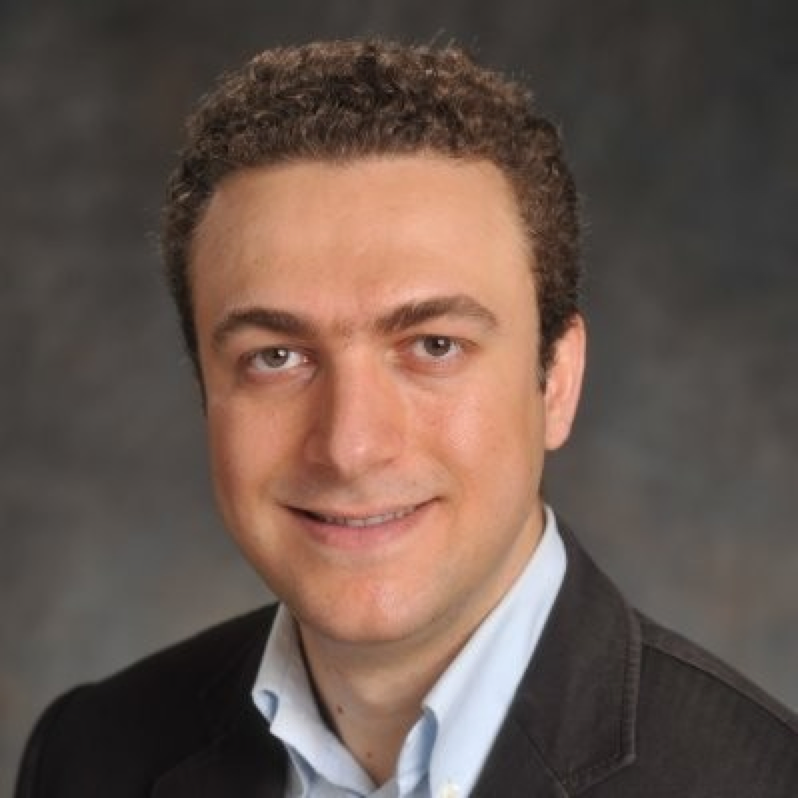
Aydogan Ozcan, Ph.D.
Dr. Aydogan Ozcan is the Chancellor's Professor and the Volgenau Chair for Engineering Innovation at UCLA and an HHMI Professor with the Howard Hughes Medical Institute, leading the Bio- and Nano-Photonics Laboratory at UCLA School of Engineering and is also the Associate Director of the California NanoSystems Institute. Dr. Ozcan is elected Fellow of the National Academy of Inventors (NAI) and holds >45 issued/granted patents and >20 pending patent applications and is also the author of one book and the co-author of >700 peer-reviewed publications in major scientific journals and conferences. Dr. Ozcan is the founder and a member of the Board of Directors of Lucendi Inc., Hana Diagnostics, Pictor Labs, as well as Holomic/Cellmic LLC, which was named a Technology Pioneer by The World Economic Forum in 2015. Dr. Ozcan has received major awards including the Presidential Early Career Award for Scientists and Engineers, International Commission for Optics Prize, Biophotonics Technology Innovator Award, Rahmi M. Koc Science Medal, International Photonics Society Early Career Achievement Award, Army Young Investigator Award, NSF CAREER Award, NIH Director's New Innovator Award, Navy Young Investigator Award, IEEE Photonics Society Young Investigator Award and Distinguished Lecturer Award, National Geographic Emerging Explorer Award, National Academy of Engineering Dr. Ozcan is also listed as a Highly Cited Researcher by Web of Science, Clarivate. http://innovate.ee.ucla.edu/welcome.html http://org.ee.ucla.edu
Title of Speech: Deep Learning-enabled Computational Microscopy and Sensing
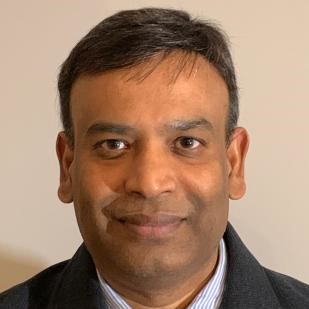
Tharmalingam Ratnarajah, Ph.D.
Prof. Tharmalingam Ratnarajah is currently working as a Professor in Digital Communications and Signal Processing with the Institute for Digital Communications, University of Edinburgh, Edinburgh, UK. He was the Head of the Institute for Digital Communications during 2016-2018. His research interests include signal processing and information-theoretic aspects of beyond 5G cellular networks, full-duplex radio, mmWave communications, random matrix theory, big data analytics and machine learning for wireless networks, statistical and array signal processing, physical-layer secrecy and interference alignment. He has published over 400 Peer-reviewed papers in these areas and holds four US patents. He was the coordinator of the European Union (EU) projects HARP (4.6M€) in the area of highly distributed MIMO and ADEL (3.7M€) in the area of licensed shared access. He was also the coordinator of the European Union Future and Emerging Technologies project CROWN (3.4M€) in the area of cognitive radio networks and HIATUS (3.6M€) in the area of interference alignment. Prof Ratnarajah was an associate editor of IEEE Transactions on Signal Processing, 2015-2017 and Technical co-chairs, The 17th IEEE International Workshop on Signal Processing advances in Wireless Communications, Edinburgh, UK, 3-6, July 2016. Prof. Ratnarajah is a member of the American Mathematical Society and Information Theory Society and a Fellow of Higher Education Academy (FHEA). He has supervised 16 PhD students and 21 post-doctoral research fellows and raised $11.0+ million (USD) of research funding.
Title of Speech: Transceiver Design for FD Cellular - MIMO Radar Coexistence
Kim, Hosung, Ph.D.
Hosung Kim is an assistant professor of Neurology at University of Southern California. He is a member of IEEE and IEEE Engineering in Medicine and Biology Society (EMBS). His research focus on developing an image processing tools and analytic platform that assesses aging of brain structures and their structural and functional networks as well as predicting the eventual long-term outcome for neurodevelopment and quantifying the progression of neurodegeneration. His group has developed various methods to quantify various aspects of brain anatomical and networking variability using multimodal neuroimaging data including structural/functional MRI, diffusion tensor imaging and EEG. Prof. Hosung has contributed significantly to the studies related to brain aging with his expertise on machine learning and deep learning. He has assessed imaging evidence of pathophysiology and provided a better understanding of progression in various sleep disorders including sleep apnea, insomnia, and narcolepsy using various quantitative methods on multimodal brain MRI.
Title of Speech: Motion Synthesis and Retrospective Correction for Motion Artifact on Brain MRI